On May 21, 2026, John Aries Almendras and Lyka Isabel Bastida exchanged their vows at Our Lady of Fatima Mission Area in Leuteboro 2, Socorro, Oriental Mindoro, before family, sponsors, and guests who had gathered to witness the beginning of a shared life. The church, a mission chapel with white walls and a gilded bell tower, held the quiet weight that Filipino wedding ceremonies carry; a solemn moment that belongs equally to the couple and to everyone who loves them. Outside, the afternoon sky was clear and unobstructed, the kind of day that makes everything feel more deliberate than coincidence.
The color motif was mint green and white, carried through the gowns of the bridesmaids, the suits and barong of the groomsmen, and even into the attire of the families present. It gave the occasion a visual coherence that the photographs would confirm long after the day had passed. Lyka wore a beaded ballgown with illusion sleeves and intricate lacework across the bodice. Aries arrived in a champagne three-piece suit with black trim, a choice that set him apart from the entourage without straying from the palette.
The celebration did not end at the church doors. A reception followed, and with it came the rituals, the dances, the Mindoro-specific customs, and the kind of communal joy that marks a gathering where everyone present feels genuinely invested in the couple's future. The program moved through each segment with care, and the evening settled into the warmth that only a wedding among close kin and community can produce.
Our Lady of Fatima Mission Area in Socorro, Oriental Mindoro
Our Lady of Fatima Mission Area stands in Leuteboro 2, Socorro, Oriental Mindoro, its white exterior and golden crowned bell tower visible against the open sky. It is not a grand cathedral. It is a community church, the kind whose proportions feel exactly right for the occasion of a family gathering before God, and that quality is precisely what makes it a fitting place to begin a marriage.
On the morning of the ceremony, the church was already dressed for the occasion. A white floral arch anchored the main entrance, and decorative arrangements in white and soft green carried the motif from the doors to the sanctuary. Guests arrived and found their places in the pews, and the entourage assembled outside, ready to enter.

Wedding Vows at Our Lady of Fatima Mission Area, Socorro
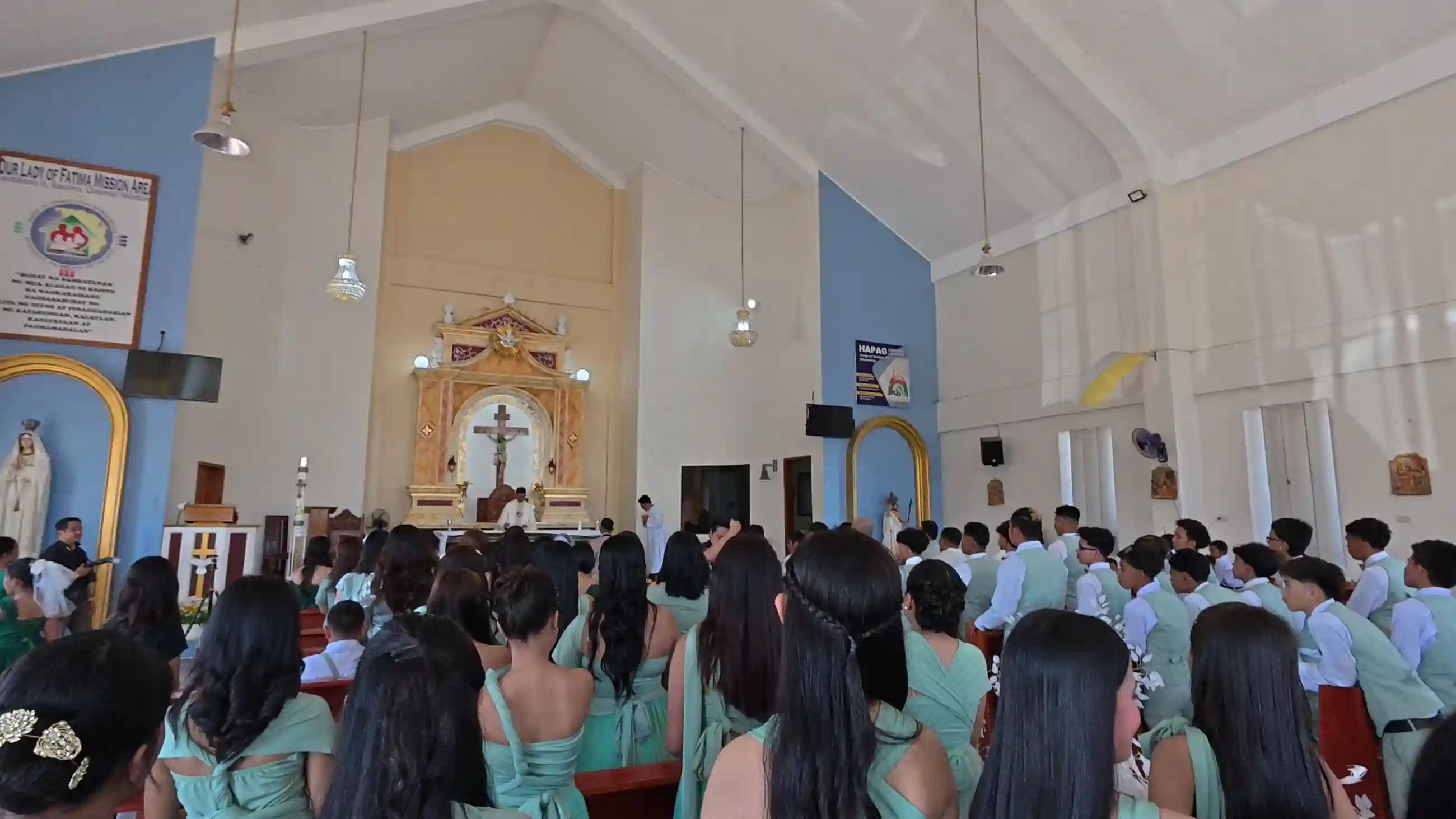
The ceremony proceeded in the manner of a traditional Filipino church wedding, dignified and layered with meaning. The entourage filled the nave in mint green and white, the bridesmaids seated on one side, the groomsmen on the other, and the sponsors positioned where the occasion placed them; close, visible, accountable. The priest presided at the altar as the rite moved through its familiar cadence of Scripture, vow, and blessing.
From the pews, the scene read as it always does at a Filipino wedding: the couple small against the height of the sanctuary, the altar glowing behind them, the congregation holding a shared silence that no one had to be asked to keep. The light inside was warm and diffused, and the church held a stillness that the program outside, with its entourage gathered under trees and sky, had not quite managed to produce.
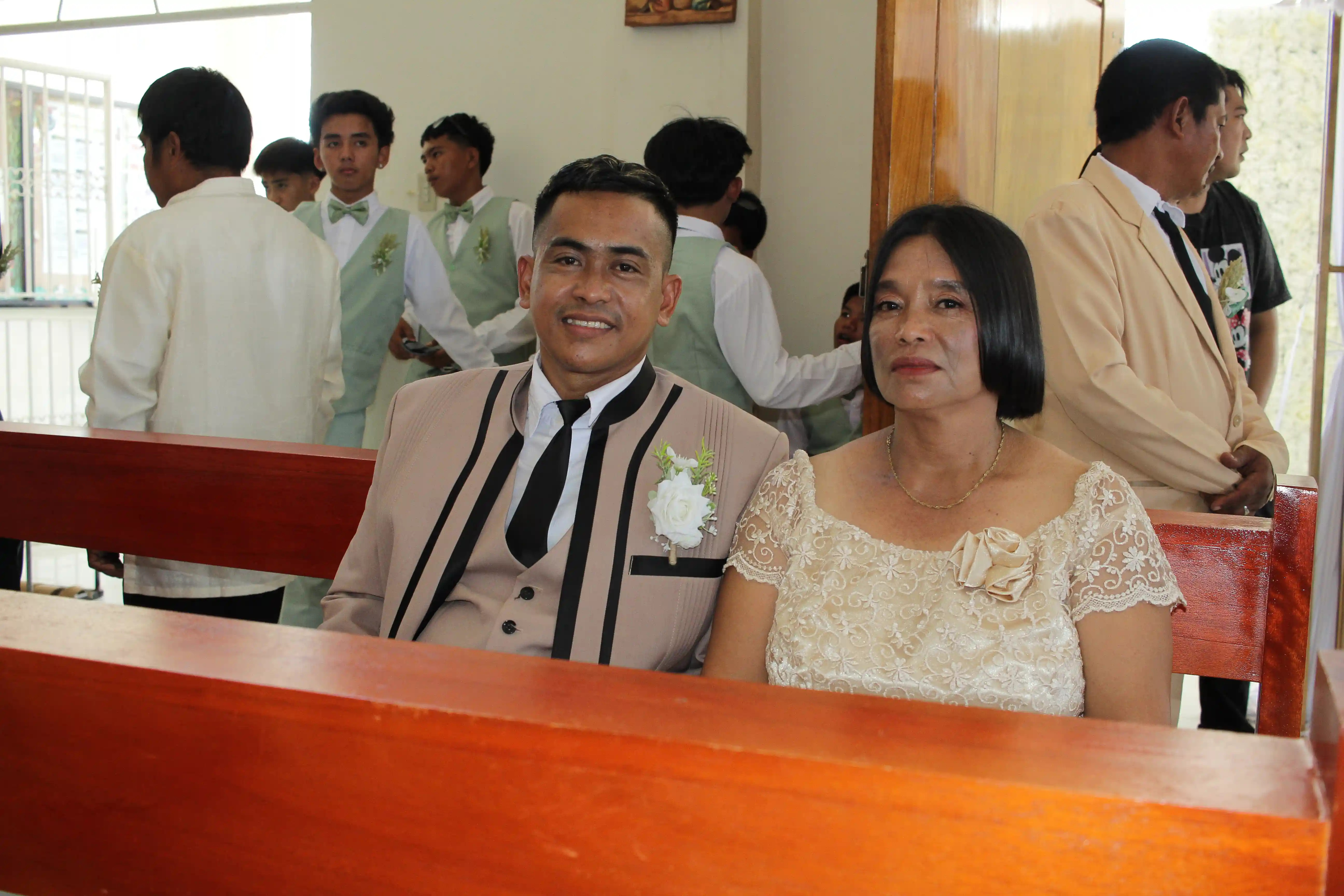
Before the ceremony began, Aries was already in the church, seated in the pew with his mother beside him. He wore his champagne and black three-piece suit, a white boutonnière on his lapel, his expression easy and open in the way that men rarely manage when the room is about to ask something significant of them. His mother sat close, composed and steady. Behind them, groomsmen in mint green vests moved through the space, adjusting and waiting, the background still carrying the restless energy of a program not yet underway.
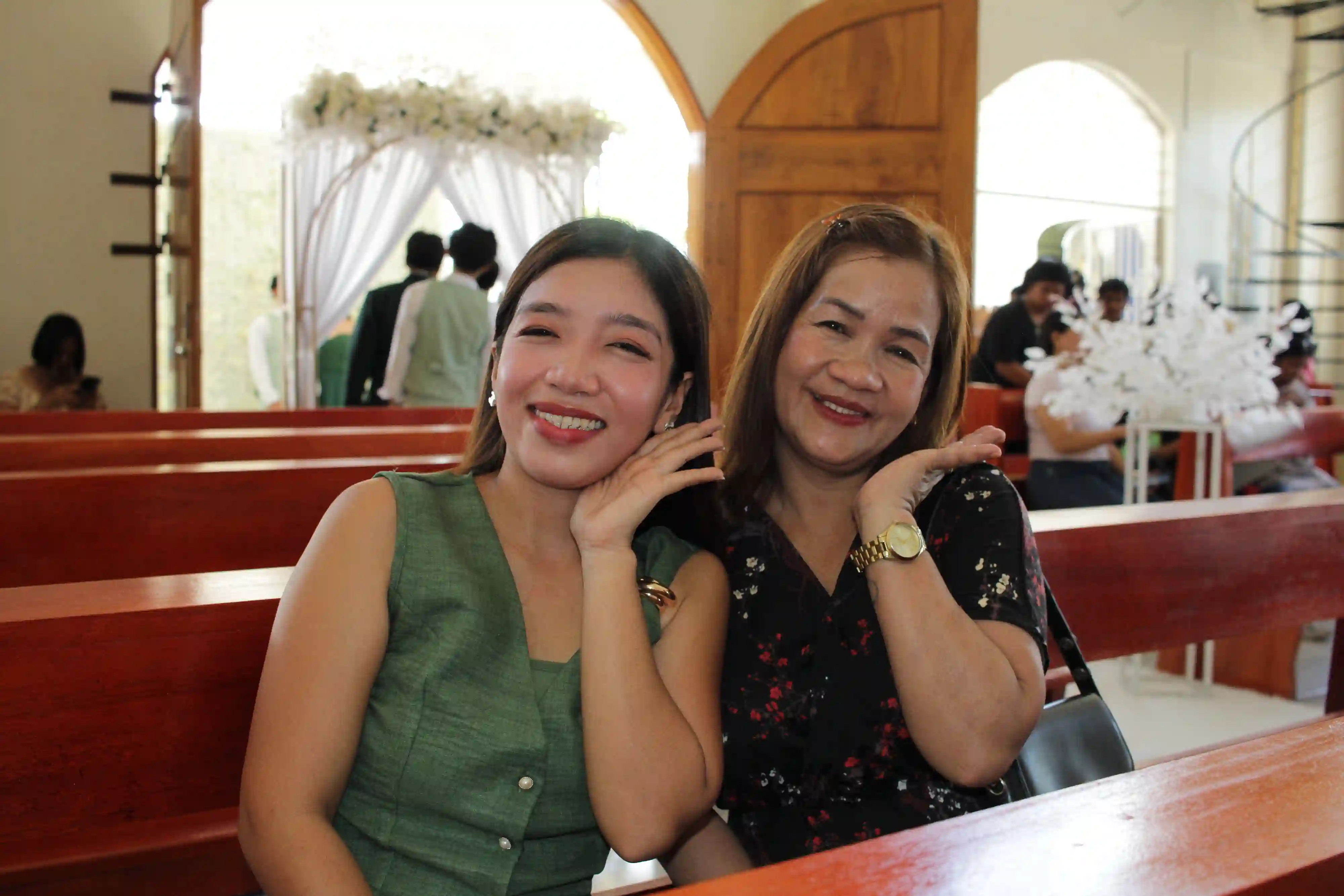
Guests who arrived early took seats before the entourage procession began, and the church filled gradually rather than all at once. Mrs Olivia and her daugther seated toward the middle of the nave, were among those who settled in and waited with the easy comfort of people who know the family well and feel no need to perform their attendance.
Family and the Altar After the Vows
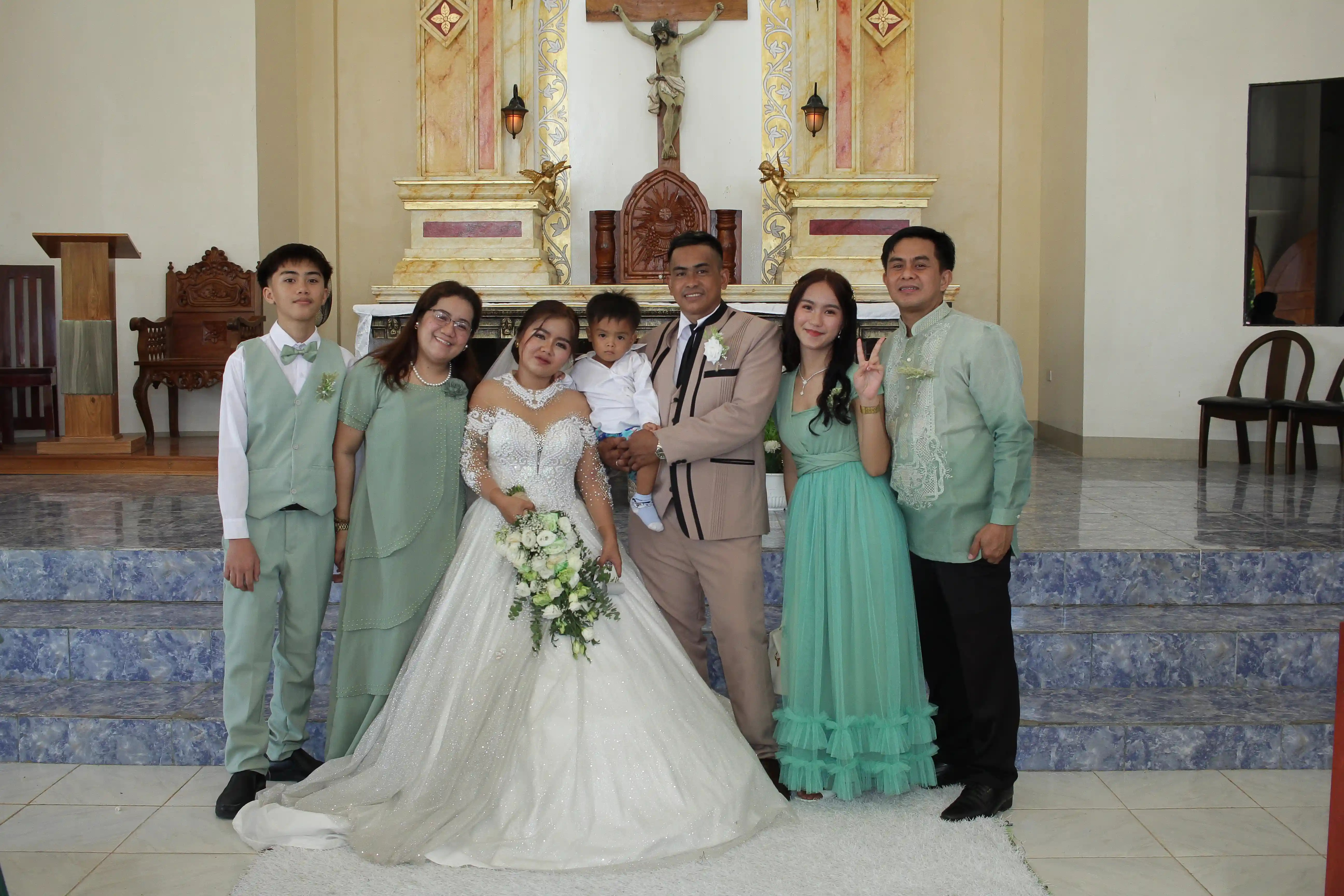
When the ceremony concluded, the couple remained at the altar for photographs. That moment in Filipino weddings holds its own particular quality. The formal rite has ended, the emotion of the vows has passed, and what remains is the family gathering around the two people at the center to mark the occasion with a photograph in front of the retablo. It is unhurried and warm and entirely unselfconscious.
Among those who gathered with the couple at the altar was the Atanoza family, who served as ninong and ninang at the wedding. They posed with Aries and Lyka in front of the gilded retablo, their mint green attire placing them visibly within the entourage, a child in arms and the altar behind them.
Other guests used the quiet before the ceremony to gather for photographs of their own inside the church. Bridesmaids, relatives, and friends clustered near the pews, children included, the altar still visible behind them.

The Entourage Gathers Between Church and Reception
Between the close of the ceremony and the formal start of the reception program, the entourage assembled outdoors. The setting was open and natural, shaded by trees whose canopy filtered the afternoon light without blocking the sky above. Against the earth and the leaves, the mint green of the entourage's attire read differently here than inside the church. It belonged.
The couple moved through this gathering as husband and wife for the first time outside the walls of the church, still in the ceremony's afterglow but already turning toward the evening ahead.
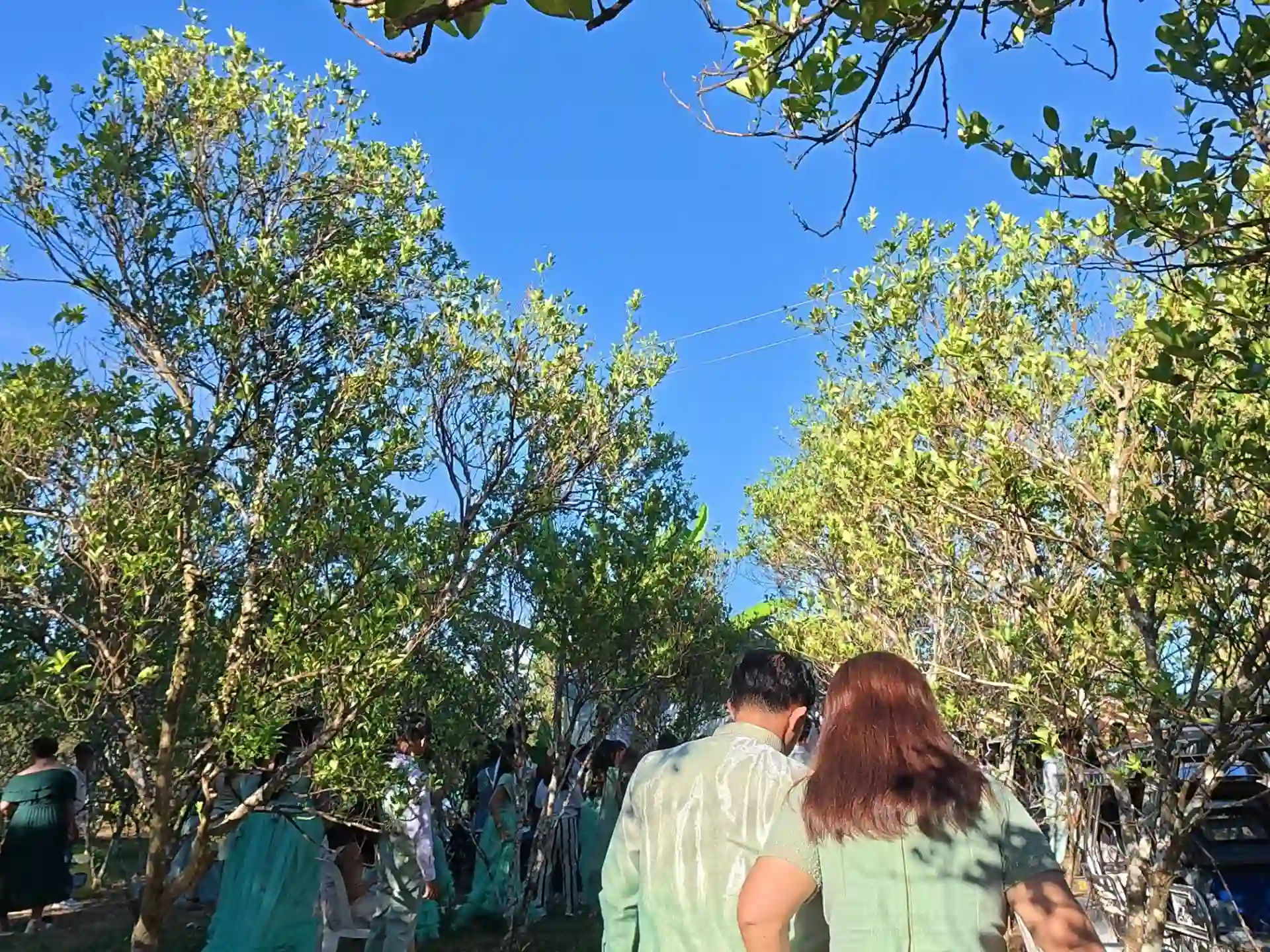
The Reception Entrance and the Newlyweds' Arrival
The reception program opened with the procession of the entourage into the venue, a sequence the guests had come to expect and that the program observed in its proper order; the abay first, then the ninongs and ninangs, then the parents, each group's entrance measured and deliberate. The reception space was decorated in the same mint green and white that had defined the day from the beginning, with floral backdrops and draped fabric framing the area where the couple would stand.
The post-ceremony exit had already offered a preview of the energy Aries brought to the moment. Outside the church, he had raised Lyka's bouquet above his head as they walked between rows of applauding guests, his smile wide and unguarded. That same spirit carried into the reception.
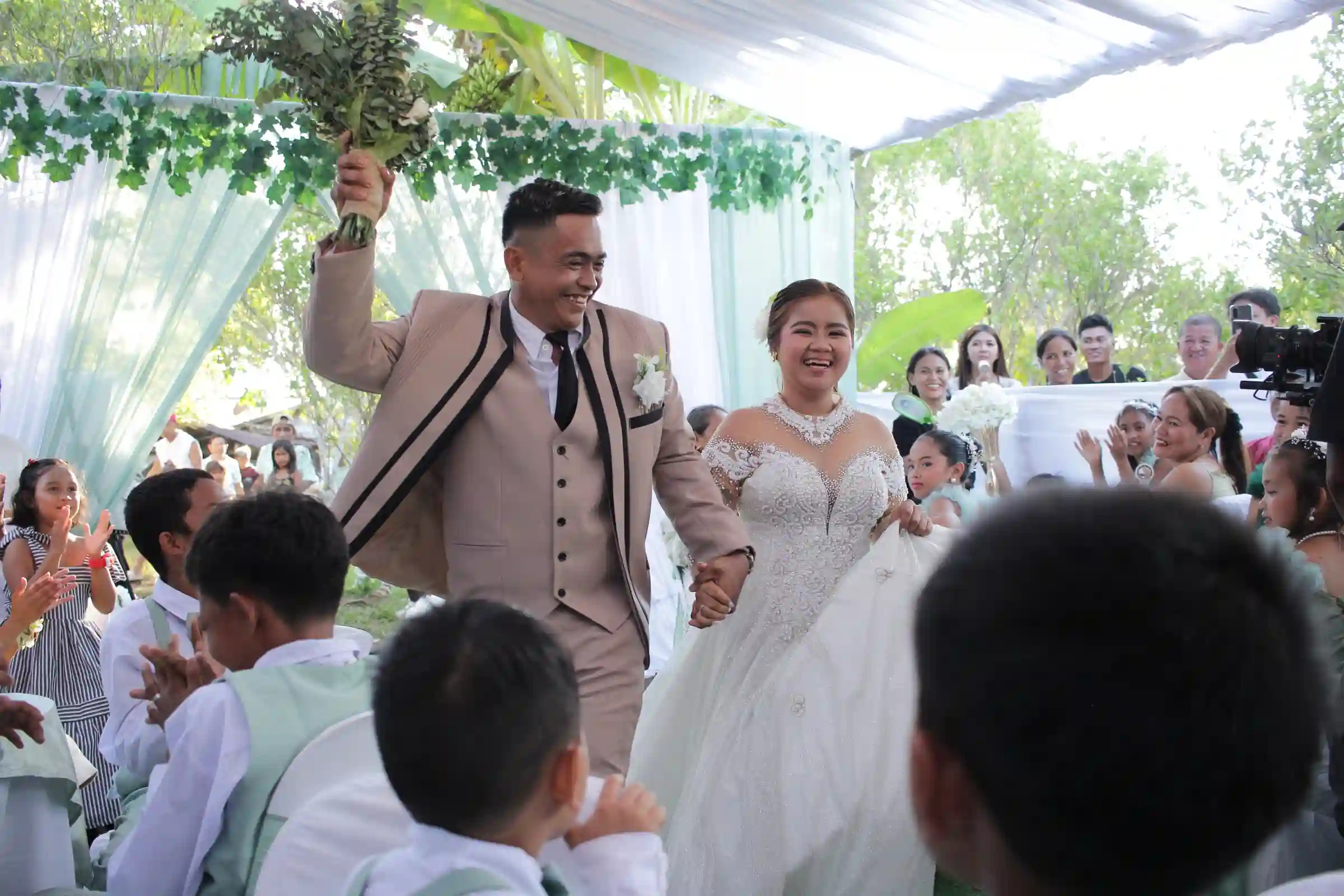
When Aries and Lyka entered the reception as husband and wife before their seated guests, the room gathered itself in the way it always does at that moment: recognition, warmth, and the collective acknowledgment that something significant had just been confirmed.
The Sayaw Pasasalamat and the First Dance
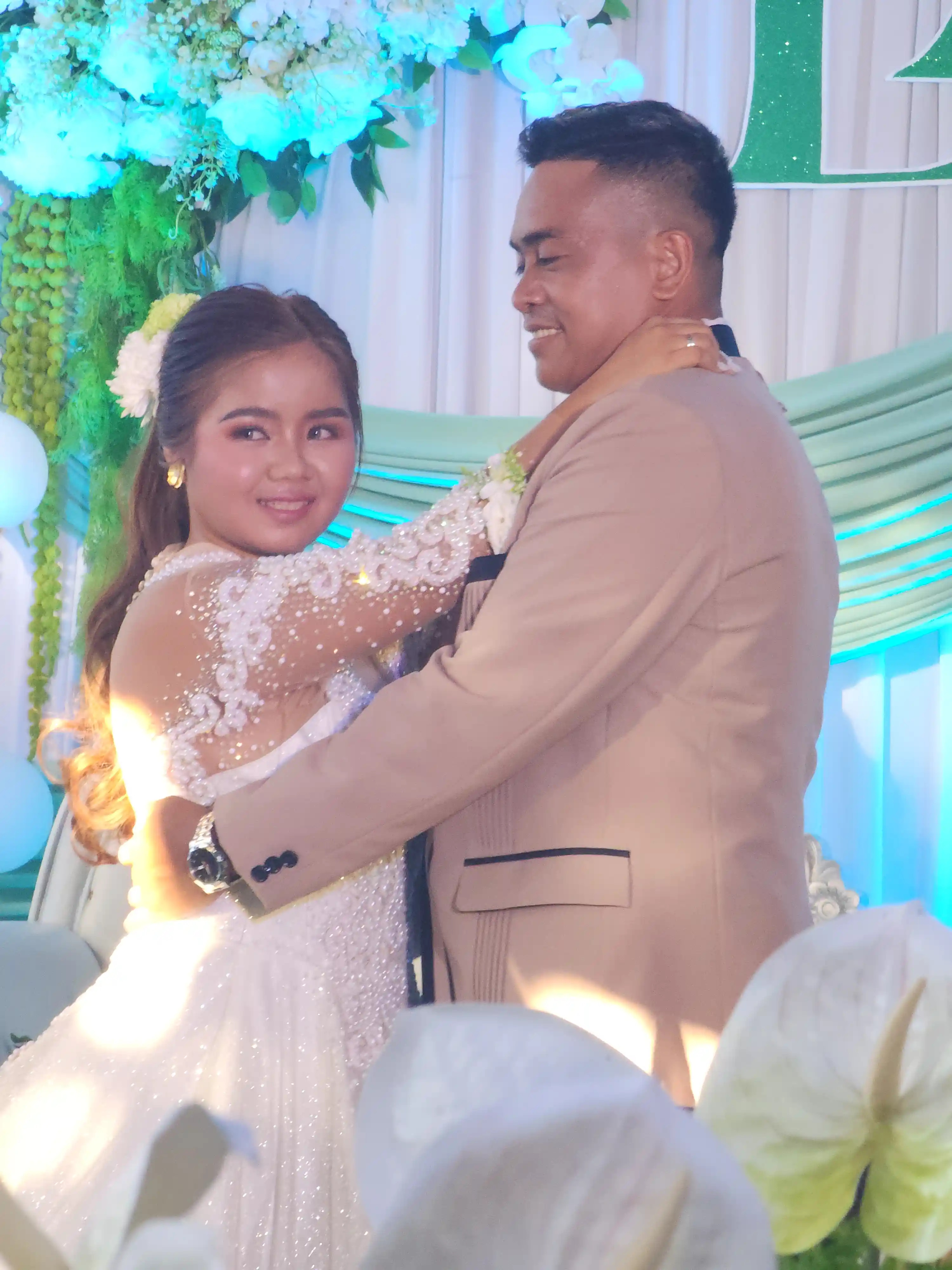
Among the most quietly significant segments of the evening were the gratitude dances. Aries danced with his mother in the sayaw pasasalamat, a moment that carries the weight of a son acknowledging the person who raised him before he steps fully into his own family. Lyka followed with her father. The father-daughter pairing holds its own distinct register, and the room tends to go still for it. The first dance of Mr. and Mrs. Almendras came after, and by the time the couple took the floor together the room had been brought to exactly the right kind of attention.
The first dance at a Filipino wedding is at once a performance and a private moment made public. The couple holds its own world for the length of a song. At this reception, with the mint and white floral backdrop behind them and the evening fully underway, Aries and Lyka danced with the ease of two people who had stopped thinking about being watched.
The Mindoro-Style Sabit, the Pakimkim, and the Evening's Final Hours
Two of the most distinctively local elements of the evening were the sabit and the pakimkim, customs rooted in the wedding culture of Mindoro that set this celebration apart from receptions held elsewhere in the country. The Mindoro-style sabit involves guests pinning money onto the couple, a practice that carries both practical and symbolic weight. It is the community's visible, collective contribution to the life the couple is beginning, conducted with a festive energy that the rest of the program rarely matches.
The pakimkim extended the giving tradition in its own form. Together, the two customs occupied a portion of the evening that was unmistakably local; rooted in the province, familiar to every guest in the room, and meaningful in ways that require no explanation to those who grew up with them. For a wedding in Socorro, Oriental Mindoro, these were not additions to the program. They were its cultural center.
Games with gifts followed, and the more structured portions of the evening gave way to laughter and participation. Dance night brought the celebration to its close, the floor opened to everyone, and the Almendras and Bastida wedding moved through every register a Filipino celebration is built to reach. The sacred, the sentimental, the communal, and the joyful.
A Wedding That Carried the Character of Socorro
The wedding of John Aries Almendras and Lyka Isabel Bastida was not a production. It was a gathering, the kind that Filipino weddings at their most grounded tend to be, built from the people in the room, the customs of the place, and the quiet agreement that a marriage is not only two people's business. Our Lady of Fatima Mission Area gave the ceremony its setting and its gravity. The open-air gathering under the trees gave the transition between church and reception its unhurried, natural quality. The reception venue, dressed in the same mint and white that had followed the day from its beginning, gave the evening its coherence.
What the occasion ultimately produced was a record of how a community in Socorro, Oriental Mindoro, celebrates one of its own. The sabit, the pakimkim, the gratitude dances, the games, the long dance night all reflected a culture that understands weddings as occasions for the many, not only for the two at the center. Aries and Lyka began their life together in the presence of the ninongs and ninangs, the parents, and the guests who know what it means to show up. That understanding, as much as any detail of the program, is what the evening carried forward.