

The first thing you notice when you step onto Alona Beach is not the water. It is the signage. Korean characters run across restaurant fronts, food stall banners, and shop windows the entire length of the strip. Walking through it on a bright January morning, you could be forgiven for doing a double take. The sand is Philippine white and the sea is unmistakably Bohol blue, but the crowd and the commerce around it have shifted considerably toward a Korean tourist economy. For a Filipino visitor, it registers immediately. Standing there with your family, looking at the signs and the faces and the menus, the thought arrives without much ceremony: it does not feel like the Philippines.
Alona Beach sits on the southwestern tip of Panglao Island in Bohol. There is no entrance fee to access the beach. Getting here is straightforward if you have a vehicle or can arrange a ride from anywhere on the island, and parking is available along the strip and within some of the resort and establishment compounds flanking the shore. From the residential side of Panglao, the drive takes around ten minutes.
First Impressions of Alona Beach Panglao: More International Than You Expect
The beach runs in two distinct moods depending on which section you are standing in. Where the concrete barrier lines the upper shore, the walkable sand narrows. The barrier is low and curved, painted with the name ALONA on its face, and it divides the resort side from the open beach in a way that feels more practical than planned. Shorebirds rest on the exposed sand beyond it without any particular concern for the foot traffic nearby.
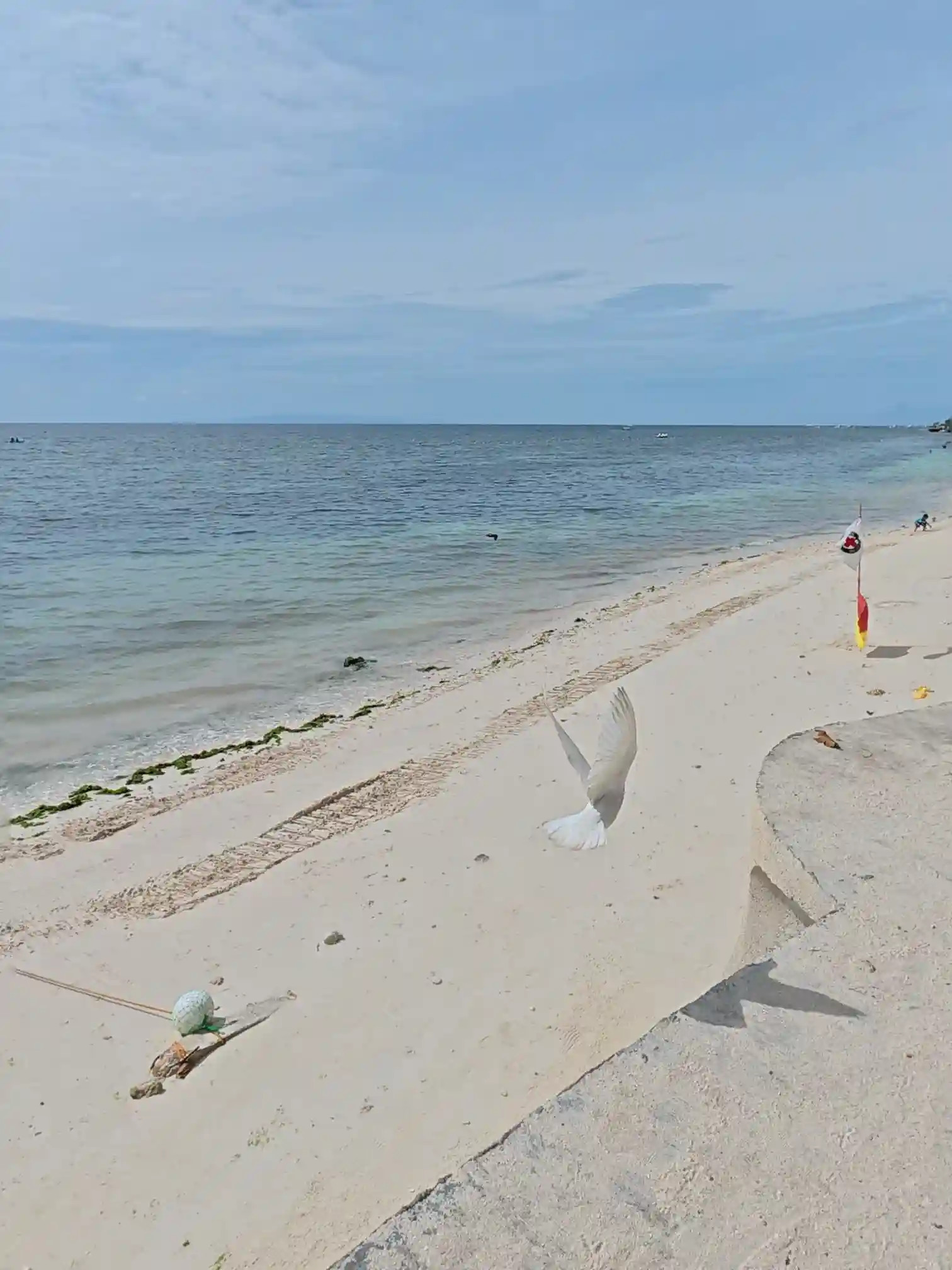
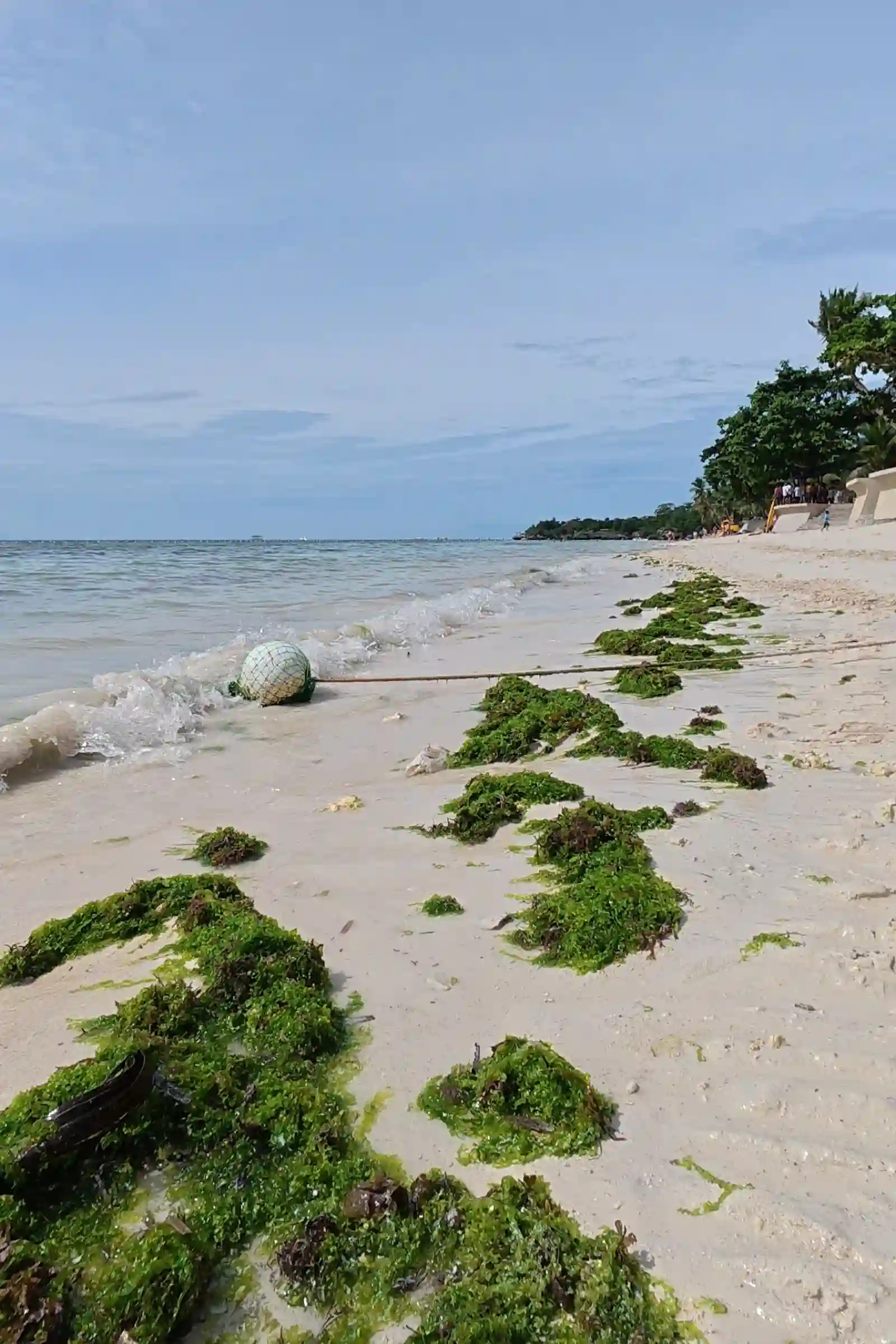
Past the barrier, the shore opens up. The sand is fine and pale, and it stays clean underfoot even where the seaweed clusters gather along the waterline. That seaweed is worth addressing directly because it surprises first-time visitors who arrive with postcard expectations. It is green and fresh, not decomposing, pushed in by the tide and sitting in loose patches across the wet sand. A fishing net buoy bobs at the waterline where a rope trails into the shallows. The water beyond the seaweed reads clear. This is simply the beach's natural rhythm, not a sign of neglect, and once you understand that, it stops reading as a flaw.
The Open Shore: Where Alona Beach Panglao Breathes
The widest and least obstructed stretch of Alona runs in front of Henann Resort. No barrier narrows the approach here. The beach opens fully, with enough room for sunbathers, swimmers, and walkers to share the same strip without pressing against each other. On a January afternoon under a deep blue sky, this section draws the densest concentration of visitors on the entire beach, and it earns that attention. The coconut palms lean dramatically out over the upper sand, their silhouettes cutting across the sky at angles that reward anyone pointing a camera upward.
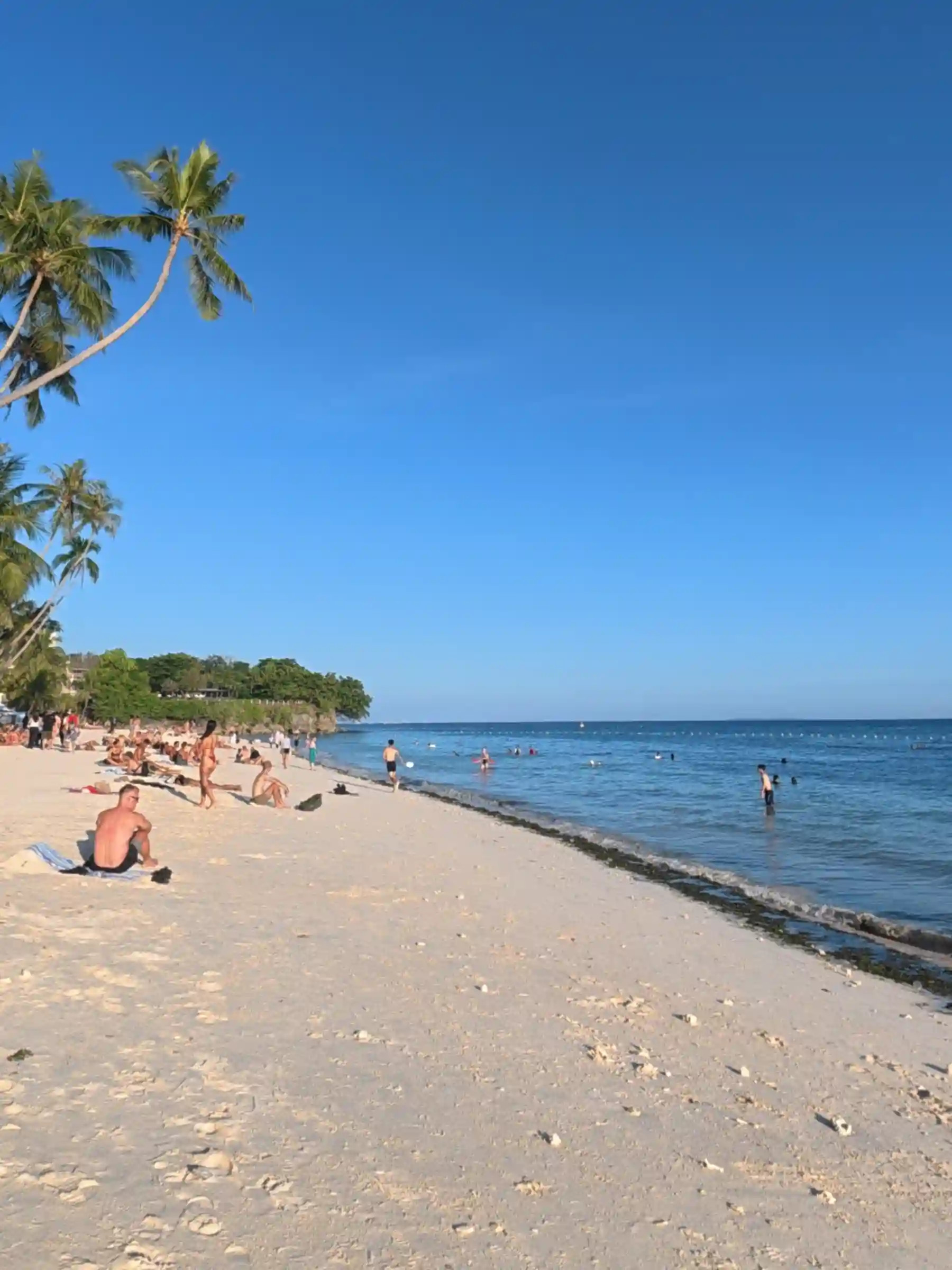
One thing no photograph prepares you for is the sun exposure. The palms look striking from below but their shade does not reach far out onto the open sand. In January, which falls within the dry season, the heat is direct and sustained with no relief from wind or cloud cover. Vendors and food stalls along the strip sell cold drinks, and stopping to hydrate is less optional than it sounds. Bring cash and plan to spend on drinks, because the convenience stores along the strip price their goods noticeably higher than what you would pay in Metro Manila.
Eating on the Strip: Beachfront Tables and Dinner at Max Cow
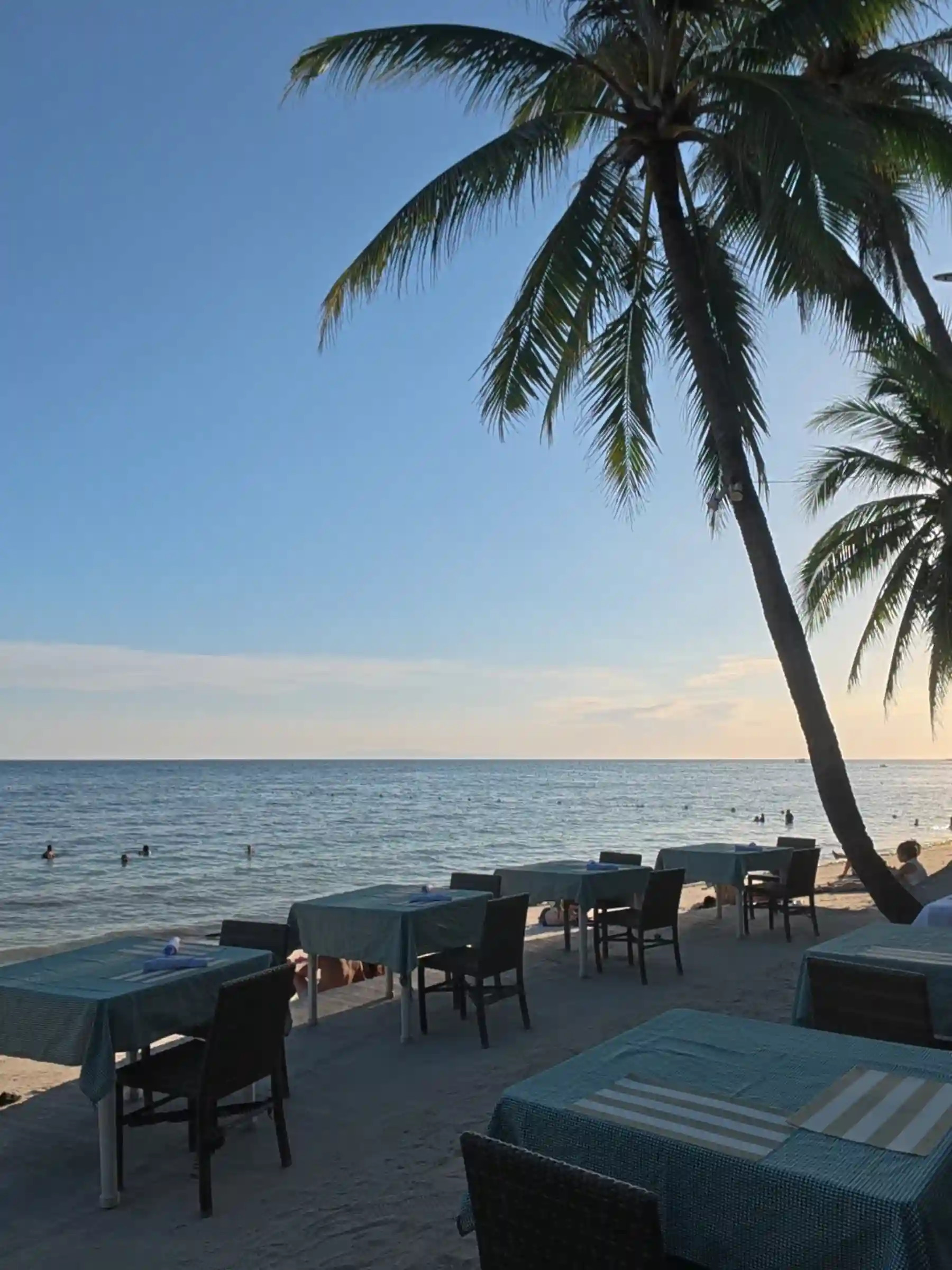
By late afternoon, the beachfront restaurants begin setting their tables directly on the sand. Teal tablecloths, dark wicker chairs, and the low angle of the softening sun turn these setups into easy photographs. Swimmers are still in the water when the first tables go out, and the light at that hour sits warm and flat across the beach.
The strip fully changes character after dark. The same path you walked in afternoon heat becomes a lit corridor of open-air bars, restaurants, and music. Max Cow is one of the more visible establishments on the night strip, its neon bull logo and yellow lettering readable from a distance, the entrance framed by a metal arch over a short set of concrete steps. Inside, the lighting runs deep blue and warm amber at the same time, the bar shelves stacked with bottles behind the counter and the dining area filling steadily through the evening.
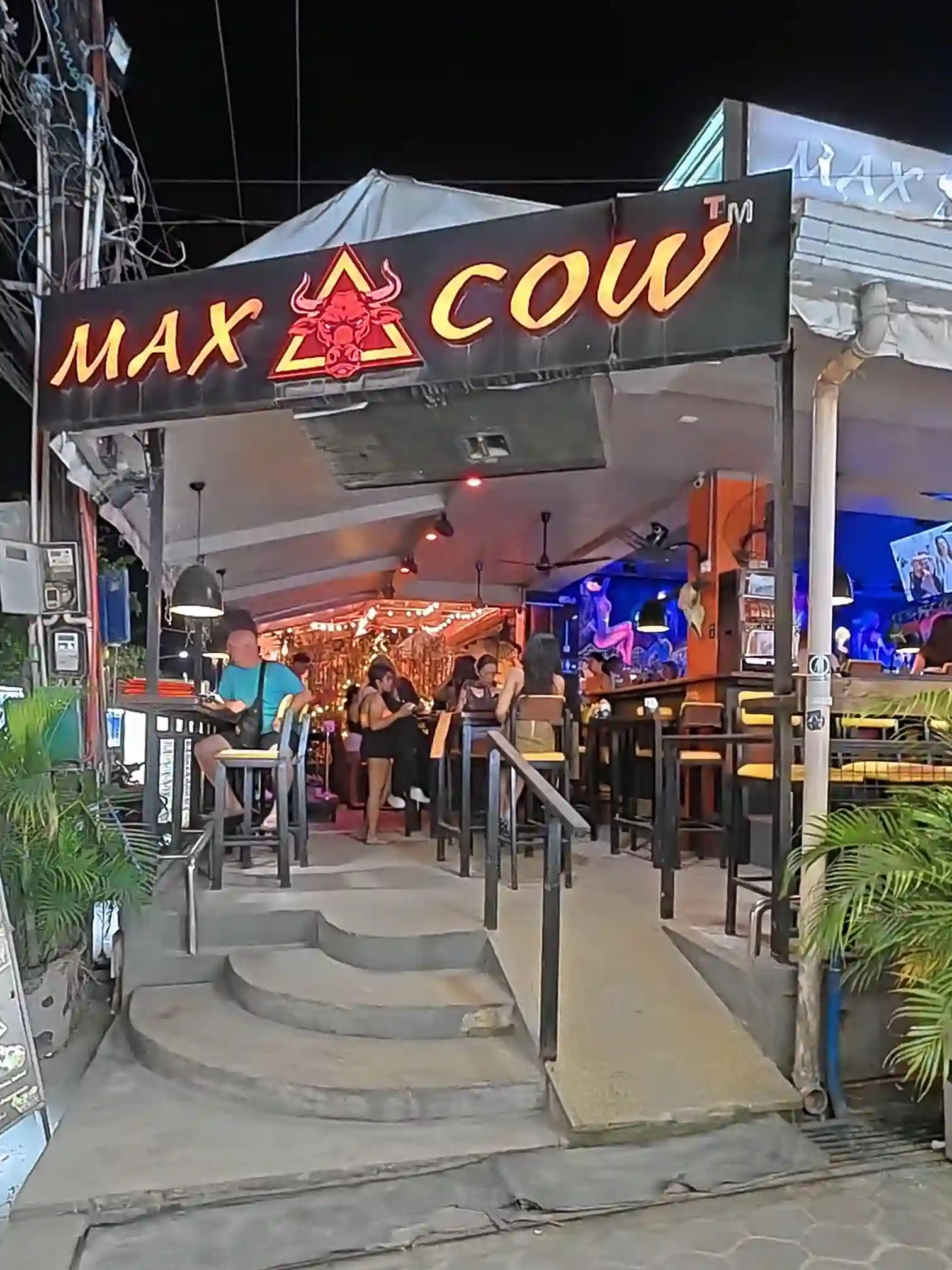
Dinner there was steak and pizza, with salads alongside. The portions were large, the food was good, and the bill was on the higher end by Philippine standards. It felt worth what was spent, which is a more honest endorsement than most. If you are eating on the Alona strip expecting budget Filipino beach prices, adjust that expectation before you sit down.

What to Know Before You Go: Practical Notes on Alona Beach Panglao
There is no entrance fee at Alona Beach. Parking is available along the strip and within some resort compounds if you arrive by private vehicle. The drive from the residential parts of Panglao Island takes about ten minutes.
Shade is genuinely scarce on the open shore. If you plan to spend the morning or midday hours walking the beach, bring water or plan to buy drinks from the vendors along the strip. Prices across the board, from restaurants to convenience stores, run higher than what most Philippine beach destinations charge. This is consistent across the entire strip and worth factoring into your budget before you arrive.
The Korean presence on the strip is not a passing trend. It shapes the food options, the signage, and the general atmosphere of the commercial area behind the beach. If you are visiting specifically for local Filipino beach culture and food, you will need to look harder for it here than in less internationally developed destinations in the Visayas.
Is Alona Beach Panglao Worth Visiting in 2026
The beach itself holds up. The water is clear, the sand is white, and the wide open stretch in front of Henann Resort is genuinely good. The seaweed along the shoreline is real and present, but it does not diminish the water quality or the overall appearance of the beach. The concrete barrier in some sections is an odd interruption, but it does not define the experience.
What Alona Beach is today is a fully internationalized beach strip that happens to sit on one of the most naturally beautiful coastlines in Bohol. It is busy, it is pricey, and it does not feel like the quiet Filipino beach getaway it might once have been. If you go in knowing that, the visit rewards you. The light in the late afternoon on the open shore is worth the drive from anywhere on the island, and dinner on the strip after dark has its own energy that is hard to replicate elsewhere in the province.
Go for the beach. Stay for the light. Budget accordingly for everything else.
FAQs
None. Alona Beach is a public beach with no entrance fee for walk-in visitors. You can access the shoreline freely without passing through any resort. Some beachfront establishments charge separately for amenity use such as chairs or showers, but the beach itself is open to everyone at no cost.
If you fly directly into Bohol-Panglao International Airport, Alona Beach is only about 4 kilometers away and tricycles cover the distance in under 10 minutes for around PHP 150 to 200. Travelers coming from Cebu take a fast ferry to Tagbilaran Port first, then hire a tricycle or taxi for the 30 to 45 minute drive to Alona Beach, which costs PHP 300 to 700 depending on the vehicle type.
Most accommodations are clustered directly along the Alona Beach strip in Barangay Tawala, ranging from budget guesthouses to mid-range beachfront resorts. Staying on or within walking distance of the strip gives you the easiest access to dive shops, restaurants, and boat tours. Options at the higher end include Henann Resort Alona Beach and The Bellevue Resort, while budget travelers often choose Moon Fools Hostel or Panglao Regents Park Resort.
Yes. The beach is accessible as a day trip from Tagbilaran City in under an hour, and from other parts of Panglao Island in 15 to 30 minutes by tricycle. Most island-hopping and snorkeling day tours sold in the area depart directly from the Alona Beach boat station, making it a practical base even for day visitors.
The beach is publicly accessible at all hours with no fixed opening or closing time. Individual resort facilities, dive shops, and beachfront restaurants operate on their own schedules, with most opening between 6 and 8 in the morning and closing by 10 at night. Early mornings before 7 give you the beach with the fewest people and the best light.